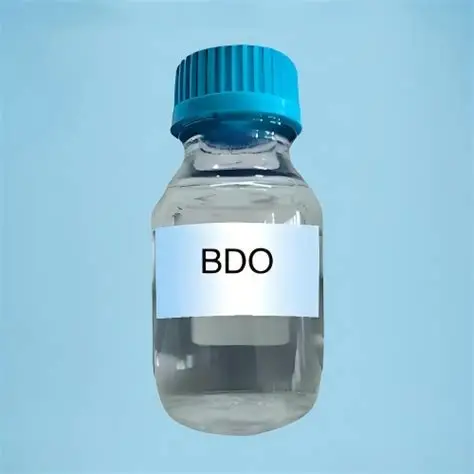
Buy 1,4-Butanediol BDO Cas 110-63-4
CAS 110-63-4 1,4-Butanediol | Products & Prices & Suppliers
- 1,4-Butanediol, commonly known as BDO, is a chemical compound with the molecular formula C4H10O2. This colorless, viscous liquid plays a pivotal role in various industrial applications. With a molecular weight of 90.12 g/mol, it is recognized for its significance as a versatile solvent and chemical intermediate. The compound’s molecular structure, featuring a chain of four carbon atoms with hydroxyl groups at each end, contributes to its efficacy in diverse chemical processes.1,4-Butanediol’s primary uses encompass its role as an industrial solvent, particularly in the synthesis of polymers such as polyurethanes and various plastics. Its solvent properties make it instrumental in the production of resilient and flexible materials. Additionally, BDO serves as a crucial component in the manufacturing of polymers like
Buy 1,4-Butanediol BDO Cas 110-63-4
Buy 1-4-Butanediol BDO Cas 110-63-4Buy 1-4-Butanediol BDO Cas 110-63-4Buy 1-4-Butanediol BDO Cas 110-63-4
1,4-Butanediol
- CAS No.
- 110-63-4
- Chemical Name:
- 1,4-Butanediol
- Synonyms
- BDO;Butanediol;BUTANE-1,4-DIOL;TETRAMETHYLENE GLYCOL;1,4-BUTYLENE GLYCOL;1,4-Butandiol;1,4-BD;1,4-Butylene;sucolb;Diol 14B
- CBNumber:
- CB4452184
- Molecular Formula:
- C4H10O2
- Molecular Weight:
- 90.12
- MDL Number:
- MFCD00002968
- MOL File:
- 110-63-4.mol
- MSDS File:
- SDS
What is 1,4-butanediol?
1,4-Butanediol (CAS 110-63-4), commonly abbreviated as BDO, is a four-carbon diol used as a chemical intermediate and solvent in polymer, pharmaceutical, and specialty chemical manufacturing.
Where is 1,4-butanediol used?
- Engineering plastics, elastic fibers, and polyurethane systems: primary building block
- PBT and polyurethane: monomer, chain extender and diol component in rigid and flexible formulations
- Spandex and elastic fibers: reacts with diisocyanates to control segment structure and mechanical performance
- Pharmaceutical and personal care manufacturing: solvent and carrier for active ingredient delivery in topical and liquid formulations
- It also serves as a precursor to gamma-butyrolactone and tetrahydrofuran.
Commercial specifications
- Bulk quantities: ISO tank, drum, and IBC formats
- Technical and industrial grades most common; high-purity grades for pharmaceutical and specialty chemical applications
- ≥99% purity standard for most industrial procurement; specifications align with customer-defined purity thresholds
| Product description | Number | Pack Size | Price |
| 1,4-Butanediol for synthesis | 8.01532 | 1l | $53 |
| 1,4-Butanediol for synthesis | 8.01532 | 2.5L | $523 |
| 1,4-Butanediol ≥99% | 240559 | 2g | $38.7 |
| 1,4-Butanediol ≥99% | 240559 | 100g | $114 |
| 1,4-Butanediol ≥99% | 158758 | 1L | $206 |
| More product size | |||
Buy 1,4-Butanediol BDO Cas 110-63-4
Buy 1,4-Butanediol BDO Cas 110-63-4
Buy 1,4-Butanediol BDO Cas 110-63-4
Buy 1,4-Butanediol BDO Cas 110-63-4
Buy 1,4-Butanediol BDO Cas 110-63-4
Buy 1,4-Butanediol BDO Cas 110-63-4
Buy 1,4-Butanediol BDO Cas 110-63-4
Buy 1,4-Butanediol BDO Cas 110-63-4
Buy 1,4-Butanediol BDO Cas 110-63-4
Buy 1,4-Butanediol BDO Cas 110-63-4
Buy 1,4-Butanediol BDO Cas 110-63-4
Buy 1,4-Butanediol BDO Cas 110-63-4
Buy 1,4-Butanediol BDO Cas 110-63-4
Buy 1,4-Butanediol BDO Cas 110-63-4
Buy 1,4-Butanediol BDO Cas 110-63-4
Buy 1,4-Butanediol BDO Cas 110-63-4
Buy 1,4-Butanediol BDO Cas 110-63-4
Buy 1,4-Butanediol BDO Cas 110-63-4
Buy 1,4-Butanediol BDO Cas 110-63-4
Buy 1,4-Butanediol BDO Cas 110-63-4
Buy 1,4-Butanediol BDO Cas 110-63-4
Buy 1,4-Butanediol BDO Cas 110-63-4
Buy 1,4-Butanediol BDO Cas 110-63-4
1,4-Butanediol Properties
| Melting point | 16 °C (lit.) |
|---|---|
| Boiling point | 230 °C (lit.) |
| Density | 1.017 g/mL at 25 °C (lit.) |
| vapor density | 3.1 (vs air) |
| vapor pressure | <0.1 hPa (20 °C) |
| refractive index | n20/D 1.445(lit.) |
| Flash point | 135 °C |
| storage temp. | Store below +30°C. |
| form | Liquid |
| pka | 14.73±0.10(Predicted) |
| color | Clear colorless |
| Odor | Odorless |
| PH | 7-8 (500g/l, H2O, 20℃) |
| explosive limit | 1.95-18.3%(V) |
| Viscosity | 83.2mm2/s |
| Water Solubility | Miscible |
| Specific Heat Capacity | Cp(liquid): 2.22 J/(g·K), at 25℃ |
| Sensitive | Hygroscopic |
| BRN | 1633445 |
| Henry’s Law Constant | 3.5×10⁴ mol/(m3Pa) at 25℃, Burkholder et al. (2019) |
| Dielectric constant | 30.0(30℃) |
| Stability | Stable. Combustible. Incompatible with strong oxidizing agents, mineral acids, acid chlorides, acid anhydrides. |
| Cosmetics Ingredients Functions | SOLVENT |
| Cosmetic Ingredient Review (CIR) | 1,4-Butanediol (110-63-4) |
| InChI | 1S/C4H10O2/c5-3-1-2-4-6/h5-6H,1-4H2 |
| InChIKey | WERYXYBDKMZEQL-UHFFFAOYSA-N |
| SMILES | OCCCCO |
| LogP | -0.88 at 25℃ |
| Surface tension | 45.33mN/m at 298.15K |
| Indirect Additives used in Food Contact Substances | 1,4-BUTYLENE GLYCOL |
| CAS DataBase Reference | 110-63-4(CAS DataBase Reference) |
| FDA 21 CFR | 175.105; 177.1500; 177.1630;177.1660; 177.1680; 177.2600 |
| EWG’s Food Scores | 1 |
| FDA UNII | 7XOO2LE6G3 |
| NIST Chemistry Reference | 1,4-Butanediol(110-63-4) |
| EPA Substance Registry System | 1,4-Butanediol (110-63-4) |
| Cosmetics Info | Butylene Glycol |
| UNSPSC Code | 12352104 |
| NACRES | NA.22 |
SAFETY
Risk and Safety Statements
| Symbol(GHS) |  GHS07 | |||||||||
|---|---|---|---|---|---|---|---|---|---|---|
| Signal word | Warning | |||||||||
| Hazard statements | H302-H336 | |||||||||
| Precautionary statements | P261-P264-P270-P271-P301+P312-P304+P340+P312 | |||||||||
| target organs | Central nervous system | |||||||||
| Hazard Codes | Xn | |||||||||
| Risk Statements | 22-67 | |||||||||
| Safety Statements | 36-23-24/25 | |||||||||
| WGK Germany | 1 | |||||||||
| RTECS | EK0525000 | |||||||||
| Autoignition Temperature | 698 °F | |||||||||
| TSCA | TSCA listed | |||||||||
| HS Code | 29053980 | |||||||||
| Storage Class | 10 – Combustible liquids | |||||||||
| Hazard Classifications | Acute Tox. 4 Oral STOT SE 3 | |||||||||
| Hazardous Substances Data | 110-63-4(Hazardous Substances Data) | |||||||||
| Toxicity | LD50 orally in Rabbit: 1525 mg/kg LD50 dermal Rabbit > 2000 mg/kg | |||||||||
| REACH Registrations | Active | |||||||||
| NFPA 704 |
|
1,4-Butanediol price More Price(12)
| Manufacturer | Product number | Product description | CAS number | Packaging | Price | Updated | Buy |
|---|---|---|---|---|---|---|---|
| Sigma-Aldrich | 8.01532 | 1,4-Butanediol for synthesis | 110-63-4 | 1l | $53 | 2026-04-30 | Buy |
| Sigma-Aldrich | 8.01532 | 1,4-Butanediol for synthesis | 110-63-4 | 2.5L | $523 | 2026-04-30 | Buy |
| Sigma-Aldrich | 240559 | 1,4-Butanediol ≥99% | 110-63-4 | 2g | $38.7 | 2026-04-30 | Buy |
| Sigma-Aldrich | 240559 | 1,4-Butanediol ≥99% | 110-63-4 | 100g | $114 | 2026-04-30 | Buy |
| Usbiological | 158758 | 1,4-Butanediol ≥99% | 110-63-4 | 1L | $206 | 2026-06-03 | Buy |
1,4-Butanediol Chemical Properties, Uses, Production
Chemical Properties
1,4-butanediol (1,4-BD) is a colorless, viscous liquid derived from butane by placement of alcohol groups at each end of its molecular chain and is one of four stable isomers of butanediol.the hydroxyl function of each end group of the Butanediol reacts with different mono- and bifunctional reagents: for example with dicarboxylic acids to polyesters, with diisocyanates to polyurethanes, or with phosgene to polycarbonates. 1.4-Butanediol (BDO) is a high-quality intermediate. BDO and its derivatives are widely used for producing plastics, solvents, electronic chemicals and elastic fibers. Additionally BDO is also a building block for the synthesis of polyesterpolyols and polyetherpolyols. BASF is the most significant producer of 1,4-Butanediol and its derivatives worldwide.
Uses
- Butanediol and its derivatives is used in a broad spectrum of applications in the chemical industry; amongst others in the manufacturing of technical plastics, polyurethanes, solvents, electronic chemicals and elastic fibres.
- 1,4-Butanediol is used in the synthesis of epothilones, a new class of cancer drugs. Also used in the stereoselective synthesis of (-)-Brevisamide.
- 1,4-Butanediol’s largest use is within tetrahydrofuran (THF) production, used to make polytetramethylene ether glycol, which goes mainly into spandex fibers, urethane elastomers, and copolyester ethers.
- It is commonly used as a solvent in the chemical industry to manufacture gamma-butyrolactone and elastic fibers like spandex.
- It is used as a cross-linking agent for thermoplastic urethanes, polyester plasticizers, paints and coatings.
- It undergoes dehydration in the presence of phosphoric acid yielded teterahydrofuran, which is an important solvent used for various applications.
- It acts an intermediate and is used to manufacture polytetramethylene ether glycol (PTMEG), polybutylene terephthalate (PBT) and polyurethane (PU).
- It finds application as an industrial cleaner and a glue remover.
- 1,4-butanediol is also used as a plasticiser (e.g. in polyesters and cellulosics), as a carrier solvent in printing ink, a cleaning agent, an adhesive (in leather, plastics, polyester laminates and polyurethane footwear), in agricultural and veterinary chemicals and in coatings (in paints, varnishes and films).
Uses
butylene glycol is a solvent with good antimicrobial action. It enhances the preservative activity of parabens. Butylene glycol also serves as a humectant and viscosity controller, and to mask odor.
Uses
1,4-Butanediol is used to produce polybutyleneterephthalate, a thermoplastic polyester;and in making tetrahydrofuran, butyrolactones,and polymeric plasticizers.
Definition
ChEBI: Butane-1,4-diol is a butanediol that is butane in which one hydrogen of each of the methyl groups is substituted by a hydroxy group. A colourless, water-miscible, viscous liquid at room temperature (m.p. 16℃) with a high boiling point (230℃), it is mainly used for the production of other organic chemicals, particularly the solvent oxolane (also known as tetrahydrofuran or THF). It has a role as a neurotoxin, a protic solvent and a prodrug. It is a butanediol and a glycol.
Production Methods
Methods of manufacturing:
The most prevalent 1,4-BD production route worldwide is BASF’s Reppe process, which reacts acetylene and formaldehyde. Acetylene reacts with two equivalents of formaldehyde to form 1,4-butynediol, also known as but-2-yne- 1,4-diol. Hydrogenation of 1,4-butynediol gives 1,4-butanediol. 1,4-BD is also made on a large industrial scale by continuous hydrogenation of the 2-butyne- 1,4-diol over modified nickel catalysts. The one-stage flow process is carried out at 80 – 160°C and 300 bar.
Mitsubishi uses a three-step process:
(1) the catalytic reaction of butadiene and acetic acid yields 1,4-diacetoxy-2-butene;
(2) subsequent hydrogenation gives 1,4-diacetoxybutane; and
(3) hydrolysis leads to 1,4-butanediol.
Synthesis Reference(s)
The Journal of Organic Chemistry, 36, p. 2018, 1971 DOI: 10.1021/jo00813a043
Tetrahedron Letters, 33, p. 6371, 1992 DOI: 10.1016/S0040-4039(00)60976-0
General Description
Odorless colorless liquid or solid (depending upon temperature).
Air & Water Reactions
Highly flammable. 1,4-Butanediol is hygroscopic. Water soluble.
Reactivity Profile
1,4-Butanediol is heat and light sensitive. 1,4-Butanediol reacts with acid chlorides, acid anhydrides and chloroformates; reacts with oxidizing agents and reducing agents. 1,4-Butanediol is incompatible with isocyanates and acids; also incompatible with peroxides, perchloric acid, sulfuric acid, hypochlorous acid, nitric acid, caustics, acetaldehyde, nitrogen peroxide and chlorine.
Hazard
Toxic by ingestion.
Health Hazard
The acute toxic effects are mild. 1,4-Butanediolis less toxic than its unsaturate analogs,butenediol and the butynediol. The oralLD50 value in white rats and guinea pigsis ~2 mL/kg. The toxic symptoms fromingestion may include excitement, depressionof the central nervous system, nausea, anddrowsiness.
Health Hazard
Ingestion of large amounts needed to produce any symptoms.
Fire Hazard
Nonflammable liquid, flash point (open cup) 121°C.
Safety Profile
A human poison by an unspecified route. Moderately toxic byingestion and intraperitoneal routes. Human systemic effects: altered sleep time. Combustible when exposed to heat or flame. To fight fire, use alcohol foam, mist, foam, CO2, dry chemical. Incompatible with oxidizing materials. When heated to decomposition it emits acrid smoke and fumes.
Solubility in water
1,4-Butanediol is soluble in water, alcohols, esters, ketones, glycol ethers and glycol ether acetates (Butanediols, Butenediol, and Butynediol).
Purification Methods
Distil the glycol and store it over Linde type 4A molecular sieves, or crystallise it twice from anhydrous diethyl ether/acetone, and redistil it. It has been recrystallised from the melt and doubly distilled in vacuo in the presence of Na2SO4. [Beilstein 1 IV 2515.]
Toxics Screening Level
The Initial Risk Screening Level (ITSL) for 1,4-butanediol (CAS# 110-63-4) is 79 μg/m3 based on annual averaging time.
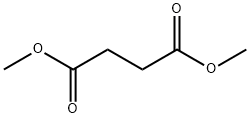

1,4-Butanediol Preparation Products And Raw materials
Description
1,4-Butanediol is commonly used as a solvent in the chemical industry to manufacture gamma-butyrolactone and elastic fibers like spandex. It is used as a cross-linking agent for thermoplastic urethanes, polyester plasticizers, paints and coatings. It undergoes dehydration in the presence of phosphoric acid yielded teterahydrofuran, which is an important solvent used for various applications. It acts an intermediate and is used to manufacture polytetramethylene ether glycol (PTMEG), polybutylene terephthalate (PBT) and polyurethane (PU). It finds application as an industrial cleaner and a glue remover.
This Thermo Scientific Chemicals brand product was originally part of the Alfa Aesar product portfolio. Some documentation and label information may refer to the legacy brand. The original Alfa Aesar product / item code or SKU reference has not changed as a part of the brand transition to Thermo Scientific Chemicals.
1,4-Butanediol is commonly used as a solvent in the chemical industry to manufacture gamma-butyrolactone and elastic fibers like spandex. It is used as a cross-linking agent for thermoplastic urethanes, polyester plasticizers, paints and coatings. It undergoes dehydration in the presence of phosphoric acid yielded teterahydrofuran, which is an important solvent used for various applications. It acts an intermediate and is used to manufacture polytetramethylene ether glycol (PTMEG), polybutylene terephthalate (PBT) and polyurethane (PU). It finds application as an industrial cleaner and a glue remover.Solubility
Miscible with water, ethanol, dimethyl sulfoxide and glycol ethers. Slightly miscible with diethyl ether. Immiscible with aliphatic and aromatic hydrocarbons.Notes
Incompatible with strong oxidizing agents, acid chlorides, acid anhydrides and reducing agents.
Specifications
Specifications
| Melting Point | 19°C to 20°C |
| Density | 1.017 |
| Boiling Point | 229°C to 230°C |
| Flash Point | 135°C (275°F) |
| Refractive Index | 1.446 |
| Quantity | 250 g |
| Beilstein | 1633445 |
| Sensitivity | Hygroscopic |
| Solubility Information | Miscible with water,ethanol,dimethyl sulfoxide and glycol ethers. Slightly miscible with diethyl ether. Immiscible with aliphatic and aromatic hydrocarbons. |
| Formula Weight | 90.12 |
1,4-Butanediol, 99% 250 g | Buy Online – Fisher Sci
CAS: 110-63-4 | C4H10O2 | 90.12 g/mol. 1,4-Butanediol is commonly used as a solvent in the chemical industry to manufacture …
- CAS: 110-63-4
- Molecular Formula: C4H10O2
- MDL Number: MFCD00002968
- Molecular Weight (g/mol): 90.12
1,4-Butanediol | 110-63-4 – ChemicalBook
Aug 25, 2026 · 1,4-Butanediol (CAS 110-63-4) information, including chemical properties, structure, melting point, boiling point, …
- Boiling point: 230 °C (lit.)
- Melting point: 16 °C (lit.)
- Density: 1.017 g/mL at 25 °C (lit.)
- vapor density: 3.1 (vs air)
1,4-Butanediol, 99% 2500 g | Buy Online – Fisher Sci
CAS: 110-63-4 | C4H10O2 | 90.12 g/mol. 1,4-Butanediol is commonly used as a solvent in the chemical industry to manufacture …
- CAS: 110-63-4
- Molecular Formula: C4H10O2
- MDL Number: MFCD00002968
- Molecular Weight (g/mol): 90.12
1,4-Butanediol, 99% 250 g | Buy Online – Thermo Fisher Scientific
1,4-Butanediol, 99%. 1,4-Butanediol is commonly used as a solvent in the chemical industry to manufacture gamma-butyrolactone …
1,4-Butanediol (1,4-BDO) | CAS 110-63-4 | Wholesale distribution …
High-quality 1,4-Butanediol (1,4-BDO). Fast, secure delivery across Europe, backed by our own warehouses and fleet. Order from a …
1,4-Butanediol (BDO) – ≥99% , CAS No.110-63-4
SDS, COA, datasheet, and spec sheet available for download. Lot-specific COA accessible via lot number lookup. Cited in 640 peer …
1,4-Butanediol (BDO) Supplier | CAS 110-63-4 | ChemiTrader
Jun 21, 2026 · Quote 1,4-Butanediol (BDO) from ChemiTrader with product specifications, origin, packaging, minimum order, and …
Buy 99% high purity 1,4 butandiol CAS:110-63-4 bulk sales from
 1,4-Butanediol (BDO) (CAS 110-63-4) is a commonly used diol raw material in industry. It is a colorless, transparent and viscous …
1,4-Butanediol (BDO)’s CAS number is 110-63-4 – sellchems.com
1, 4-Butanediol (BDO) is an important organic chemicals and chemical raw materials, the CAS number is 110-63-4 and you can buy it …
1,4-butanediol | CAS 110-63-4 | SoleChem
1,4-Butanediol (BDO) Supplier — CAS 110-63-4. Industrial and polymer-grade available for PBT, polyurethane, and solvent …
Deep dive into Buy 1,4-Butanediol BDO Cas 110-63-4
- 1 4 butanediol chemical
- 1 4 butane diol for sale
- 1.4 butanediol properties
- 1,4 butane dicarboxylate
- where to buy butanedol
- 1 4 butane
- butanediol chemical properties
- chebi butane diol
 1,4-Butanediol (BDO) (CAS 110-63-4) is a commonly used diol raw material in industry. It is a colorless, transparent and viscous …
Reviews
There are no reviews yet.