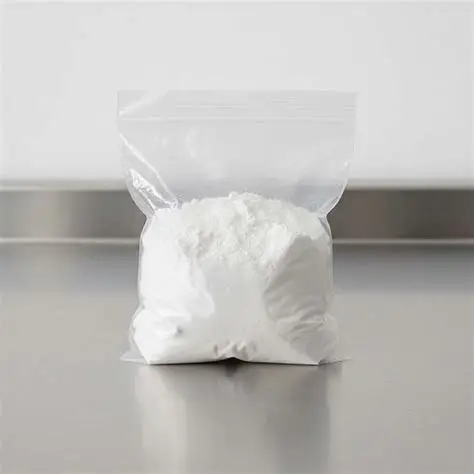

Hydromorphone (dihydromorphinone) Cas 466-99-9 for sale
Hydromorphone (dihydromorphinone) Cas 466-99-9 for sale
Hydromorphone

- CAS No.
- 466-99-9
- Chemical Name:
- Hydromorphone
- Synonyms
- Dilaudid;DiMo;Laudicon;Hymorphon;Hymorphan;Novolaudon;Dimorphone;Dilaudid-HP;idromorfone;hydromorfona
- CBNumber:
- CB6168696
- Molecular Formula:
- C17H19NO3
- Molecular Weight:
- 285.34
- MOL File:
- 466-99-9.mol
- MSDS File:
- SDS
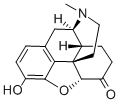
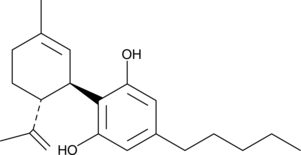
Identification Name Hydromorphone Synonyms Wln: T B6566 B6/Co 4Abbc R Bx Fv Ho Pn Ght&&Ttj Jq P1; (-)-(5R)-4,5-Epoxy-3-Hydroxy-9Alpha-Methylmorphinan-6-One; 4,5-Epoxy-3-Hydroxy-17-Methylmorphinan-6-One Molecular Structure 
Molecular Formula C17H19NO3 Molecular Weight 285.34 CAS Registry Number 466-99-9 EINECS 207-383-5 SMILES [C@@]125C3=C4C[C@H]([C@@H]1CCC([C@@H]2OC3=C(C=C4)O)=O)N(C)CC5 InChI 1S/C17H19NO3/c1-18-7-6-17-10-3-5-13(20)16(17)21-15-12(19)4-2-9(14(15)17)8-11(10)18/h2,4,10-11,16,19H,3,5-8H2,1H3/t10-,11+,16-,17-/m0/s1 InChIKey WVLOADHCBXTIJK-YNHQPCIGSA-N Properties Density 1.404g/cm3 (Cal.) Boiling point 475.595°C at 760 mmHg (Cal.) Flash point 241.432°C (Cal.) Safety Data Controlled Substance DEA Drug Code Number: 9150 Details CSA Schedule: II Is Narcotics? Yes SDS Available References (1) Kenneth E. Thummel and Danny D. Shen. Percentage Binding in Plasma, “Goodman & Gilman’s The Pharmacological Basis of Therapeutics”, 10/e, Ed. by Joel G. Hardman, Lee E. Limbird and Alfred Goodman Gilman, McGraw-Hill, pp. 1917-2023‘Bound in Plasma’ (%) values have been taken from the Table A-II-1 given in Appendix II of the above mentioned reference. Users are requested to go through the comments associated with these values, which have been given as footnotes in the table. Only drugs that had ‘Bound in Plasma’ values indicated for them have been provided in the files here. Structures (and values) for Clavulanate (22), Heparin (Extensive), Lithium (0), Mycophenolate (MPA: 97.5), Prednisolone (90-95 (<200 ng/ml), ~70(>1 microgm/ml)) and Rapacuronium (50-88) have not been provided here. In all, 280 drugs and their ‘Bound in Plasma’ values (%) are given in the files here. (2) Kenneth E. Thummel and Danny D. Shen. Peak Time, “Goodman & Gilman’s The Pharmacological Basis of Therapeutics”, 10/e, Ed. by Joel G. Hardman, Lee E. Limbird and Alfred Goodman Gilman, McGraw-Hill, pp. 1917-2023‘Peak-Time’ values have been taken from the Table A-II-1 given in Appendix II of the above mentioned reference. These are in hours unless otherwise indicated. Users are requested to go through the comments associated with these values, which have been given as footnotes in the table. Only drugs that had ‘Peak-Time’ values indicated for them have been provided in the files here. Structures (and values) for Clavulanate (1.3), Enoxaparin (3), Epoetin Alfa (SC: 18, IP:12), Etanercept (SC-SD:72(48-96)), Filgrastim (4-5.8), Heparin (3), Interferon Alfa (IM:3.8,SC:7.3), Interferon Beta (SC:1-8), Lithium (IR:0.5-3, SR:2-6), Mycophenolate (MPA: 1.1-2.2), Prednisolone (1.5+-0.5), Sargramostim (A,SC: 1-3, C,SC:1.5-4) and Streptokinase (0.9+-0.21) have not been provided here. In all, 270 drugs and their ‘Peak-Time’ values are given in the files here. (3) Kenneth E. Thummel and Danny D. Shen. Urinary Excretion, “Goodman & Gilman’s The Pharmacological Basis of Therapeutics”, 10/e, Ed. by Joel G. Hardman, Lee E. Limbird and Alfred Goodman Gilman, McGraw-Hill, pp. 1917-2023Urinary Excretion (%) values have been taken from the Table A-II-1 given in Appendix II of the above mentioned reference. Users are requested to go through the comments associated with these values, which have been given as footnotes in the table. Only drugs that had Urinary Excretion values indicated for them have been provided in the files here. Structures (and values) for Alteplase (t-PA) (Low), Clavulanate (43+-14), Enoxaparin (43), Epoetin alfa (<3), Etanercept (Negligible), Heparin (Negligible), Lithium (95+-15), Mycophenolate (MPA: <1), Prednisolone (26+-9), Rapacuronium (6-22) and Streptokinase (0) have not been provided here. In all, 297 drugs and their Urinary Excretion values (%) are given in the files here. (4) Kenneth E. Thummel and Danny D. Shen. Volume of Distribution, “Goodman & Gilman’s The Pharmacological Basis of Therapeutics”, 10/e, Ed. by Joel G. Hardman, Lee E. Limbird and Alfred Goodman Gilman, McGraw-Hill, pp. 1917-2023‘Volume of Distribution’ values have been taken from the Table A-II-1 given in Appendix II of the above mentioned reference. These are in liters/kg units unless otherwise indicated. Users are requested to go through the comments associated with these values, which have been given as footnotes in the table. Only drugs that had ‘Volume of Distribution’ values indicated for them have been provided in the files here. Structures (and values) for Alteplase (t-PA) (0.10+-0.01), Clavulanate (0.21+-0.05), Enoxaparin (0.12+-0.04), Epoetin Alfa (0.033+-0.013 (0.033-0.075)), Etanercept (0.11), Filgrastim (0.15), Heparin (0.058+-0.11) +- 0.1), Infliximab (0.043). Interferon Alfa (0.40+-0.19), Interferon Beta (2.9+-1.8), Lithium (0.66+-0.16), Mycophenolate (MPA: 3.6+-4), Prednisolone (0.42+-0.11), Rapacuronium (0.2-0.5), Sargramostim (A: -, C:2(0.4-18) liters/(m.m)) and Streptokinase (0.08+-0.04) have not been provided here. In all, 284 drugs and their ‘Volume of Distribution’ values are given in the files here. (5) Kenneth E. Thummel and Danny D. Shen. Peak Concentration, “Goodman & Gilman’s The Pharmacological Basis of Therapeutics”, 10/e, Ed. by Joel G. Hardman, Lee E. Limbird and Alfred Goodman Gilman, McGraw-Hill, pp. 1917-2023‘Peak-Concentrations’ values have been taken from the Table A-II-1 given in Appendix II of the above mentioned reference. The units are indicated along with the values. Users are requested to go through the comments associated with these values, which have been given as footnotes in the table. Structures (and values) for Alteplase (t-PA) (973+-133 ng/ml), Clavulanate (2.8 micro g/ml), Enoxaparin (ACLM: 145+-45 ng/ml, BCLM: 414+-87 ng/ml), Epoetin Alfa (SC: 176+-75 U/l, IP: 375+-123 U/l), Etanercept (IV:2.32 micro-g/ml, SC-SD:1.2 micro-g/ml, SC-MD 3 micro-g/ml), Filgrastim (SC: 4 and 49 ng/ml), Heparin (70+-39 ng/ml), Infliximab (118 micro-g/ml), Interferon Alfa (IV: ~13 ng/ml, IM: 2.0 (1.5-2.6) ng/ml, SC: 1.7 (1.2-2.3) ng/ml), Interferon Beta (IV: 1491+-659 IU/ml, SC: 40+-20 IU/ml), Lithium (IR: 1-2 mM, SR: 0.7-1.2 mM), Mycophenolate (MPA: 8-19 micro-g/ml), Prednisolone (458+-150 ng/ml), Rapacuronium (6-20 micro-g/ml), Sargramostim (A, IV: 5ng/ml, A, SC: 1.5 ng/ml, C, IV: 100 ng/ml, C, SC: 10 ng/ml) and Streptokinase (188+-58 IU/ml) have not been provided here. In all, 304 drugs and their ‘Peak-Concentration’ values are given in the files here.
| Melting point | 266-267° |
|---|---|
| alpha | D25 -194° (c = 0.98 in dioxane) |
| Boiling point | 427.77°C (rough estimate) |
| Density | 1.0864 (rough estimate) |
| refractive index | 1.5400 (estimate) |
| Flash point | 9℃ |
| storage temp. | -20°C |
| solubility | Chloroform (Slightly), Dioxane (Slightly, Sonicated) |
| pka | pKa 8.15 (Uncertain) |
| form | Solid |
| color | White to Off-White |
| Water Solubility | 1.931g/L(25 ºC) |
| InChI | 1S/C17H19NO3/c1-18-7-6-17-10-3-5-13(20)16(17)21-15-12(19)4-2-9(14(15)17)8-11(10)18/h2,4,10-11,16,19H,3,5-8H2,1H3/t10-,11+,16-,17-/m0/s1 |
| InChIKey | WVLOADHCBXTIJK-YNHQPCIGSA-N |
| SMILES | CN1CC[C@@]23[C@H]4CCC(=O)[C@@H]2Oc5c(O)ccc(C[C@@H]14)c35 |
SAFETY
Risk and Safety Statements
| Symbol(GHS) |    GHS02,GHS06,GHS08 | |||||||||
|---|---|---|---|---|---|---|---|---|---|---|
| Signal word | Danger | |||||||||
| Hazard statements | H225-H301+H311+H331-H370 | |||||||||
| Precautionary statements | P210-P260-P280-P301+P310-P311 | |||||||||
| target organs | Eyes,Central nervous system | |||||||||
| Hazard Codes | F,T | |||||||||
| Risk Statements | 11-23/24/25-39/23/24/25 | |||||||||
| Safety Statements | 7-16-36/37-45 | |||||||||
| RIDADR | 1544 | |||||||||
| WGK Germany | 1 | |||||||||
| HazardClass | 6.1(a) | |||||||||
| PackingGroup | II | |||||||||
| Storage Class | 3 – Flammable liquids | |||||||||
| Hazard Classifications | Acute Tox. 3 Dermal Acute Tox. 3 Inhalation Acute Tox. 3 Oral Flam. Liq. 2 STOT SE 1 | |||||||||
| Hazardous Substances Data | 466-99-9(Hazardous Substances Data) | |||||||||
| REACH Registrations | Active | |||||||||
| NFPA 704 |
|
Hydromorphone Chemical Properties,Uses,Production
Description
Hydromorphone (Item No. 15463) is an analytical reference material categorized as an opioid. It is a metabolite of morphine (Item Nos. 15464 | ISO60147). Like other opioid analgesics, hydromorphone is commonly abused. Hydromorphone is regulated as a Schedule II compound in the United States. This product is intended for research and forensic applications.
Uses
Hydromorphone, a potent opioid, is used mainly in the palliative care seing or in patients who are not opioid naive. It can be useful if considering opioid rotation. Hydromorphone 1.3mg is approximately equianalgesic to morphine 10 mg. Both immediate- and sustained-release preparations are available.
Definition
ChEBI: A morphinane alkaloid that is a hydrogenated ketone derivative of morphine. A semi-synthetic drug, it is a centrally acting pain medication of the opioid class.
Biological Functions
Hydromorphone is eight times as potent as morphine but has less bioavailability following oral administration. Its side effects do not differ from those of morphine but are more intense. Hydromorphone is indicated for use in severe pain and in high doses for relief of pain in opioid-addicted patients.
General Description
Hydromorphone, (Dilaudid) is a synthetic derivative ofmorphine prepared by the catalytic hydrogenation and dehydrogenationof morphine under acidic conditions, using alarge excess of platinum or palladium. Oxidation of the 6-OH of morphine resulted in a compound with decreased potency.Reducing the 7,8 double bond of morphine increasedthe flexibility of the molecule and resulted in a compoundwith slightly enhanced binding. Making both of these structuralchanges to morphine-produced hydromorphone, acompound approximately 5 times as potent as morphine.Hydromorphone was introduced in 1926 and is available as animmediate release tablet, a liquid, and a suppository. A sustainedrelease form is available in some countries but not inthe United States. The sustained release form was removedfrom the U.S. market in 2005 when studies showed that drinking8 oz of alcohol (40%) could cause the drug to be releasedfrom the capsule immediately and lead to concentrations thatwere 5.5 times higher than in patients that did not drink alcohol.This potentially lethal combination prompted the Foodand Drug Administration (FDA) to remove it from the market.
Hydromorphone Preparation Products And Raw materials
Raw materials
Preparation Products
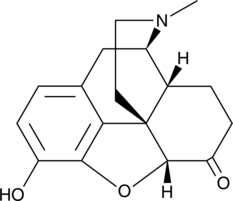
Hydromorphone
Item No. 15463
Synonyms
- Dilaudid
- Exalgo®
- Jurnista
- Novolaudon
- NSC 19046
Technical Information
Regulatory Information
Shipping & Storage Information
Recommended Products



Certificates of Analysis & Batch Specific Data
Provide batch numbers separated by commas to download or request available product inserts, QC sheets, certificates of analysis, data packs, and GC-MS data.
Hydromorphone (CAS 466-99-9) – Cayman Chem
Hydromorphone: An Analytical Reference Material. CAS Number: 466-99-9. Synonyms: Dilaudid, Exalgo®, Jurnista, Novolaudon, …Read more
Hydromorphone | 466-99-9 – ChemicalBook
Nov 4, 2026 · Hydromorphone (CAS 466-99-9) information, including chemical properties, structure, melting point, boiling point, …Read more
- alpha: D25 -194° (c = 0.98 in dioxane)
- Density: 1.0864 (rough estimate)
- Boiling point: 427.77°C (rough estimate)
- Melting point: 266-267°
Hydromorphone (CRM) (CAS 466-99-9) – Cayman Chem
This product is a DEA exempt preparation of a scheduled compound – does not require DEA Controlled Substance registration or …Read more
Hydromorphone | 466-99-9 – ChemicalBook
Sep 12, 2026 · Hydromorphone (Item No. 15463) is an analytical reference material categorized as an opioid. It is a metabolite of …Read more
- alpha: D25 -194° (c = 0.98 in dioxane)
- Density: 1.0864 (rough estimate)
- Boiling point: 427.77°C (rough estimate)
- Melting point: 266-267°
Hydromorphone solution 1 mg/mL in methanol, certified reference …
Hydromorphone, marketed under brand names including Palladone and Dilaudid, is a very potent opioid analgesic. The drug is often …Read more
Hydromorphone (CAS 466-99-9) | Physicochemical properties
Detailed information about Hydromorphone (CAS 466-99-9), including physicochemical properties, SDS, safety data, applications, …Read more
Hydromorphone – NIST Chemistry WebBook
Use this link for bookmarking this species for future reference. The National Institute of Standards and Technology (NIST) uses its …Read more
Hydromorphone solution 1 mg/mL in methanol, certified reference …
Hydromorphone solution 1 mg/mL in methanol, certified reference material, ampule of 1 mL, Cerilliant® CAS Number: 466-99-9; …Read more
466-99-9 | Drug Information, Uses, Side Effects, Chemistry …
Know about technical details of 466-99-9 like: chemical name, chemistry structure, formulation, uses, toxicity, action, side effects and …Read more
hydromorphone | 466-99-9
Chemical name:hydromorphone ; CAS NO:466-99-9; Molecular Formula:C<sub>17</sub>H<sub>19</sub>NO<sub>3</sub>; …Read m
Reviews
There are no reviews yet.